Two phones cost much the same, but their labels show different letters beside a tools symbol. Is the higher repairability class worth paying for? Start by separating the possibility of repair from its eventual cost. The label describes the former; it is not a quotation for the latter.
The European Commission explains that smartphone and slate-tablet energy-labelling requirements apply to devices placed on the EU market from June 20, 2025. There are exclusions, so the label should not be treated as a requirement for every gadget or every country. This article concerns the European system, not a retailer's own rating.
One label, several different questions
The prominent letter beside the coloured scale is the energy-efficiency class, running from A to G. Repairability appears separately beside the tools symbol and uses A to E. Within this system, A is the most repairable class and E the least. Comparing one phone's large letter with another's repairability letter would mix two different measures.
The consumer guide posted on the Commission website in June 2026 also distinguishes runtime on one charge from battery endurance in charging cycles. Runtime is measured under standardised conditions and can differ from your daily experience. Cycle endurance concerns retained capacity. Neither figure tells you what a technician will charge to replace the battery.
Design and support both contribute
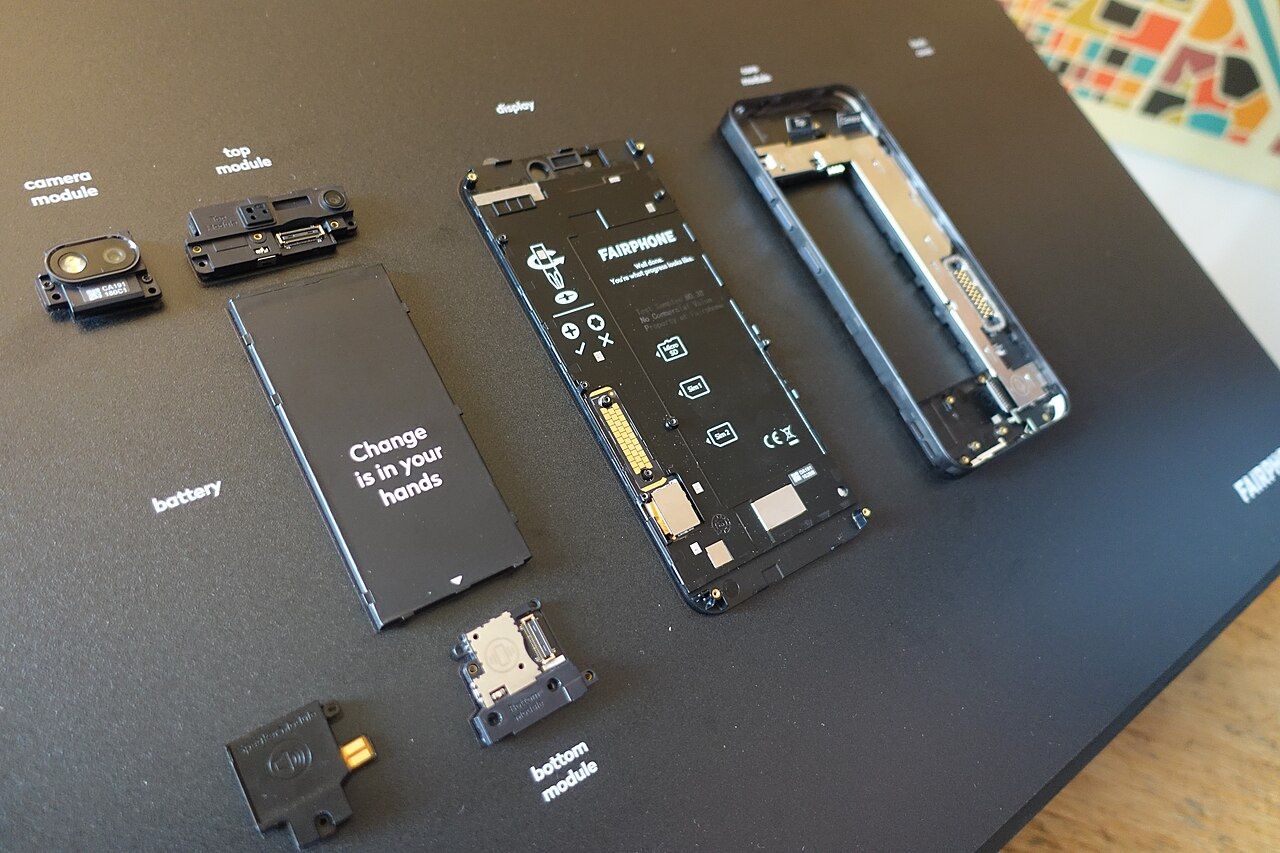
The Commission's Joint Research Centre (JRC) identifies six elements in the assessment: disassembly depth, fasteners, tools, spare-part availability, software updates and repair information. Their combined result is not simply a screw count. Nor is it a promise that an owner can replace every component without professional help.
A JRC explanation dated April 30, 2026 makes the distinction particularly clear: repair depends on product design and on the services supplied by its manufacturer. Easy access to a commonly replaced part and ordinary tools are useful, but missing parts or instructions can still constrain a repair. Similar-looking cases are therefore not evidence of equivalent support.
Turn the rating into specific questions
Begin with the exact model identifier. The label's QR code links to the European EPREL database, which the Commission points to for more detailed information. Match that entry to the variant in your basket before looking up its parts and repair options. The database does not replace an answer from a repairer you can actually use.
Consider a hypothetical choice: one phone has a lower purchase price, while the other has a higher repairability class. Those two facts cannot establish which will cost less over several years. You would also need battery and screen prices, labour charges, delivery times for parts and a service option accessible to you. Without those details, paying extra is a decision under uncertainty, not a verified saving.
Ask the seller a concrete question: where can this model's battery be replaced, which parts are available, and does the quoted price include labour? Keep the answer with the model code. For a purchase outside the EU, check the local supply and service arrangements separately. A European database entry does not establish that parts are stocked in your city.
Repairable does not mean fault-free
A high repairability class is useful for comparison, but it does not guarantee freedom from faults or free repairs. It also does not establish that you can safely repair the phone yourself. Do not take a device apart merely because it has a high repairability class. The purchasing lesson is to identify the measure, check a practical repair route and then compare prices. An initial discount and the possibility of keeping a device in use are different parts of the same decision.
Related reading
Sources
- https://energy-efficient-products.ec.europa.eu/product-list/smartphones-and-tablets_en
- https://joint-research-centre.ec.europa.eu/jrc-news-and-updates/new-eu-labels-help-consumers-choose-more-repairable-electronics-2025-06-20_en
- https://joint-research-centre.ec.europa.eu/jrc-explains/why-repairability-matters-future-tech-products_en
- https://energy-efficient-products.ec.europa.eu/document/download/7e3c83fd-a46f-4939-8b82-e9ae6611f942_en?filename=Smartphones%26Tablets_ConsumerGuidelines_08.06.2026.pdf
- https://commons.wikimedia.org/wiki/File:Fairphone_3_modules_on_display.jpg
